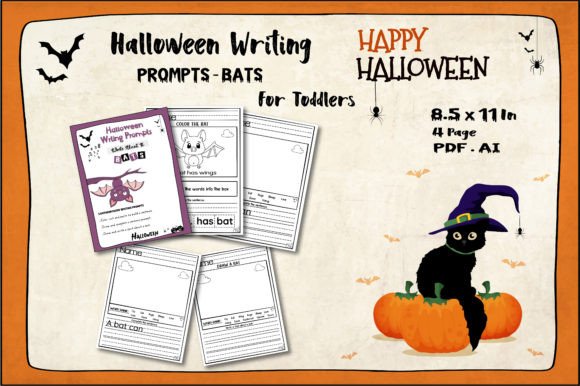
Bat-Themed Halloween Writing Prompts: A Design Perspective
Effective design, whether for educational materials or brand storytelling, hinges on structured creativity and thoughtful differentiation. The concept of Halloween Writing Prompts - Bats offers a compelling case study in how thematic assets can be leveraged to create targeted, engaging content. This resource isn't just a worksheet; it's a framework for visual communication, where the progression from cut-and-paste sentences to independent story creation mirrors the design process itself—from assembling components to crafting a cohesive narrative.
The Anatomy of a Differentiated Design Asset
From a design workflow perspective, the "Write About It! Bats Pack" exemplifies a well-considered creative asset system. It provides three distinct levels of engagement, a principle directly applicable to creating scalable brand assets and marketing materials. Consider the parallels:
- Introductory Level (Color, Cut, Paste): This is the design equivalent of using pre-made components or a style guide. It ensures consistency and foundational understanding, perfect for establishing a brand's core visual elements like a logo or color palette.
- Mid Level (Draw and Complete): Here, the framework is set, but creative input is required. This aligns with designing within established brand guidelines for social media graphics or editorial layouts, where the template exists but content needs to be adapted.
- High Level (Draw and Write Independently): This represents full creative ownership, akin to developing a complete brand identity or a custom packaging design. It requires a deep understanding of the foundational principles to create something unique and effective.
Practical Applications in Visual Communication
The utility of such a structured, thematic prompt system extends far beyond a single classroom application. Its principles are invaluable for designers, marketers, and creators across various domains.
- Brand Identity & Marketing Collateral: Use the bat theme as a springboard for a seasonal campaign. The differentiated levels can inform how you design assets for different audience segments—from simple, bold graphics for broad awareness (Introductory) to detailed, story-driven content for engaged followers (High Level).
- Social Media & Web Design: Create a series of posts or a microsite section that guides users through a narrative. Start with interactive, low-effort engagement (polls, simple graphics) and progress to deeper content (blog posts, videos, downloadable resources), mirroring the scaffolded learning approach.
- Packaging & Editorial Design: The visual hierarchy established by the prompt levels—moving from concrete instructions to open-ended creation—is excellent for designing instructional manuals, product guides, or even interactive packaging that tells a story as the user interacts with it.
Tips for Effective Implementation and Design Evaluation
When integrating resources like Halloween Writing Prompts - Bats into your creative projects, apply a designer's critical eye. Evaluate the asset not just on theme, but on its underlying structure and adaptability.
- Assess Visual Hierarchy and Readability: Does the design guide the eye naturally from the introductory task to the more complex one? Are fonts and spacing clear? Good typography and a thoughtful color palette are non-negotiable, even in educational materials.
- Check for Scalability and Consistency: Can the core visual elements (the bat illustrations, the font styles, the color scheme) be extracted and used consistently across other materials, like a presentation or a website banner? Strong design assets are modular.
- Align with Audience and Goal: Just as you wouldn't use a Kindergarten-level template for a corporate report, ensure the complexity of the design asset matches your user's context. The goal is to enable success, not cause frustration.
Ultimately, the value of any creative resource lies in its ability to communicate clearly and inspire action. Whether you're sourcing assets for a Halloween-themed digital marketing push or developing instructional design materials, prioritizing a logical structure, clean visual design, and adaptable components will elevate your project. Thoughtful design choices transform simple prompts into powerful tools for engagement, education, and brand storytelling.